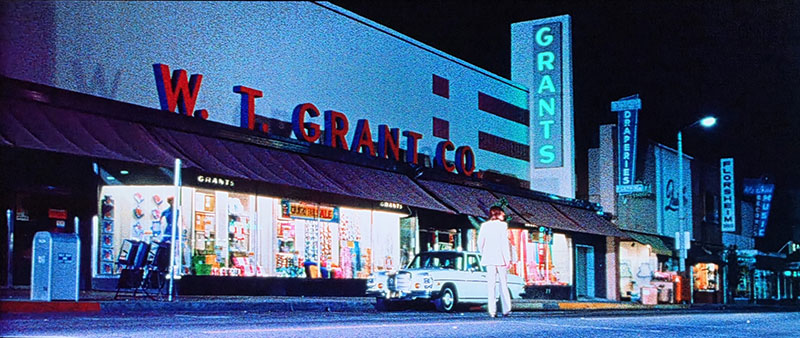
Not too long ago I was watching the 1974 horror film Messiah of Evil. The film briefly features a young Walter Hill (best known for directing 48 Hrs (1982) and producing the Alien series) and directed by Gloria Katz and Willard Hyuck Jr., a couple that co-wrote American Graffiti (1973), Star Wars (1977), and, of all things, Howard the Duck (1986). As I watched it, amidst the gore and uneven acting, a lightbulb went off in my head. “Hey, I know that street!”
The street in question was the central corridor of the Culver Center shopping center. Amongst the horrors of Messiah of Evil is the neon and sodium-soaked signage of one of the first strip malls in Culver City.
Amidst the blood, guts, and baffling direction are the storefronts of the Culver Center shopping center. While much has changed, including the businesses, the signage, and more than a few actual buildings, the Culver Center is still there (and is now, fortunately, vampire-free).
I figured it was a great excuse to go through the archives to see what other vintage views we have of the shopping center.
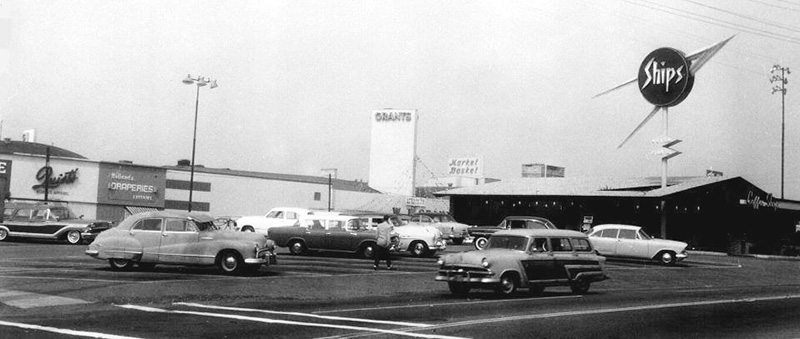
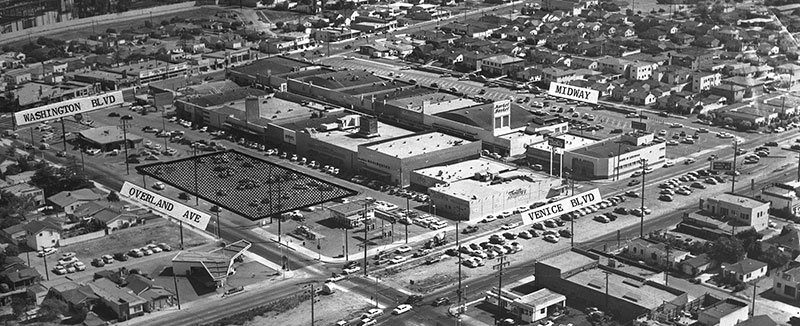
The Culver Center is a shopping center braced by Washington Boulevard and Venice Boulevard to its north and south, and Overland to its east. Construction started in February of 1949 and opened to three days of fanfare in October of that year. Developed by Touchstone Brothers, the center existed as an example of postwar prosperity that (almost) all Americans could enjoy, featuring a Van de Kamp’s bakery, a Karl’s shoe store, Joe Wellington’s Culver City Drugs, and even a JCPenney (only one of 139 in the state!), among others.
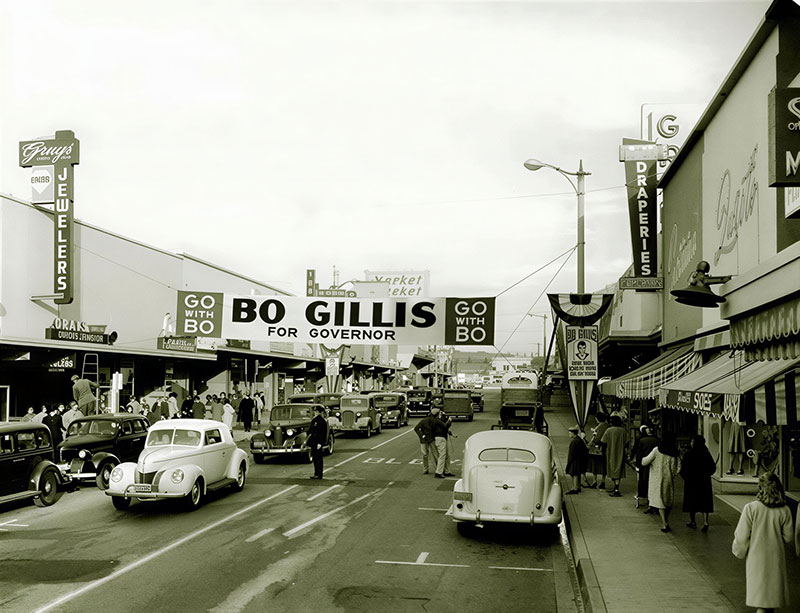
1974 isn’t the only time Culver Center was featured in a motion picture, either. In 1961 it was used as the Main Street of a small Alabama town in the Dean Martin picture, Ada. The street (now a parking lot) was dressed up with period-appropriate automobiles, and a banner telling us to vote for “Bo Gillis” was strung across the street.
While Messiah of Evil might not be the most distinguished moment in Culver City history (or in the careers of the people involved), it still represents a vision of our city that is, for better or worse, long gone. Without talents like Katz and Hyuck taking the time and the money to make a movie, we might not have this record. Like much of what we have in our archive you never know how, if, or when something is going to be important until it is — and every once in a while, it also involves vampires!
Ships restaurant in Culver Center
Still from the movie Messiah of Evil, filmed in 1974 with Culver Center as a prominent film location.
1962 aerial shot of Culver Center, taken for a study conducted by the Culver City Planning Department
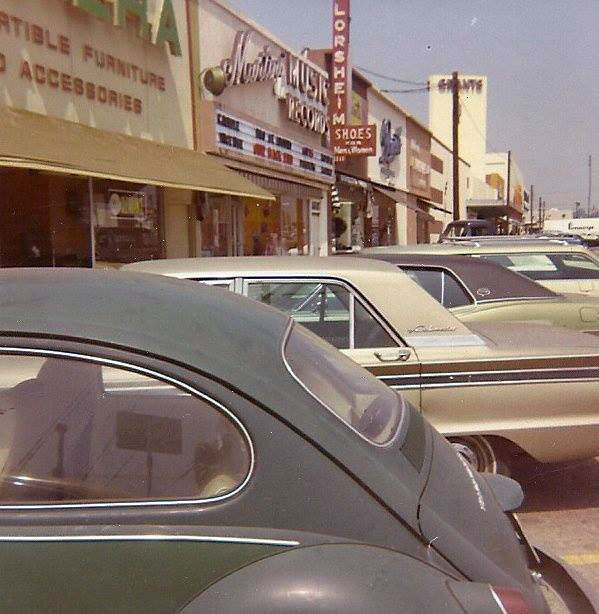
Culver Center during its retail heyday in the late-60s
Culver Center stands in for a small-town main street in the movie Ada.